I can't come up with clever post titles before 10 AM.
I really wish that Dragon Magazine would stop putting scantily-clad women on their covers. I don't like feeling like some kind of perv when I step up to the checkout counter at Barnes & Noble. Not that I don't like scantily-clad women (as long as it's not exploitative), but the cover of an all-ages gaming magazine just ain't the place for it.
Regarding the same cover, it also kinda bothers me that female archfiends in D&D are almost always portrayed as seductresses. (Well, except for Zuggtmoy, she's an exception.) Why can't they come in the same variety of types as the males? Actually, in my write-up of Astarte, I deliberately had her motivation and methods have nothing to do with her sex, as a reaction to this "female archfiend syndrome."
It's weird, too, 'cause gender equality is such a vital part of D&D. You'd think that they could at least balance it out once in a while with some scantily-clad men. Not that that would make me feel any less awkward, but at least it would be fair.
Friday, February 23, 2007

Sunday, February 18, 2007
Cosmogenesis
For as long as I can remember, J. R. R. Tolkien has been my favorite writer. It's not an easy subject for me to talk about -- The Lord of the Rings is often written off as pop literature dross, and throughout the years I've learned that if I so much as drop Tolkien's name into a conversation I'm opening myself up to ridicule for being a "nerd." Yet I can't escape Tolkien's impact on my life and outlook. I've enjoyed Tolkien's works since I was a child because his skill at creating a realistic fictional setting continues to fascinate me to this day.
I first took to Tolkien as a child. I think I was about five or six years old when I saw a short animated movie based on The Hobbit. I don't remember much about it save that it was hilariously bad. The acting was wooden, the characters looked absurd and cartoony, and everyone seemed to be bursting into song every five minutes. Later I viewed a film based on The Return of the King (the third part of Rings), which had all the flaws of The Hobbit and further suffered as an ending with no beginning or middle: the creators had for some unfathomable reason neglected to animate the first two parts.
Yet for all their flaws something about these silly cartoons fascinated me. Although the plots were simple (and dumbed-down from the original), there was a feeling that there was something more to this world, this Middle-earth, where the characters were traipsing about. Little details, names dropped here and there for no apparent reason, people and places that had nothing to do with the story but whose identities I hungered to learn -- there was this sense that I was skimming the surface of a truly ancient place with far more stories left to tell. This feeling only magnified after I asked my mother to read The Hobbit to me, and when I read The Lord of the Rings on my own.
Eventually I read The Silmarillion -- Tolkien's life's work on which he'd labored for years between writing his novels, which only saw publication after his death. A collection of fabricated myths and legends, The Silmarillion laid out the back-story (the "legendarium" as Tolkien called it) behind Middle-earth, of which The Lord of the Rings is just a brief side-story covering some twenty-odd years at the end of the story. It's heavy stuff, on par with the Celtic Mabinogion or the Finnish Kalevala.
It was this sense of epic scope that drew me in. I've always been fascinated with the conceit of fictional worlds. Mythologies. The idea that Tolkien could create such a setting from scratch -- languages, cultures, worlds! -- gripped me. The realization that I too was capable of this kind of creation inspired me to pursue art and writing just to do the same thing, and while I'm hardly very good at either, I still get a real thrill from the process. I think this desire to learn about and/or create mythologies is common to many people, and not just fans of the fantasy and science-fiction genres: sports fans follow detailed histories and rivalries between teams stretching back generations, while housewives retain decades' worth of soap opera back-story with convoluted and ever-changing relationships. This desire for mythology permeates our culture.
While the recent film adaptations of The Lord of the Rings have gone a long way towards bringing his books into the mainstream, they're still widely decried as worthless fluff; perhaps by bringing to light the things that made me enjoy these stories, others may consider giving them a chance. Maybe they'll like them the same way I do -- or maybe they won't like them at all. The genre just isn't for many people, and I'm fine with that. In any case, I hope that in the future I may change or challenge the way some people look at Tolkien. It never hurts to broaden one's horizons: there are whole worlds out there to find.
Saturday, February 17, 2007
Ukelele in Central Park
I swear, I intend to do some actual writing on this weblog in the near future. I do have a post or two lined up, but it's so hard for me to motivate myself to work on them.
So in lieu of an actual post, please enjoy this video of a man playing a ukelele remarkably well.
So in lieu of an actual post, please enjoy this video of a man playing a ukelele remarkably well.
Saturday, February 03, 2007
Creative Writing Strikes Back: The Road to Gemstead
This is a short story I wrote in high school five years ago -- the only work of fiction I've ever actually finished. It's essentially a D&D fanfic, using original characters and my personal (and still-yet-unused) campaign setting. Looking back on it, I'm surprised that I was so proficient a writer. Not to say that it's a classic -- I find it rather mediocre -- but what can I say, I need to give myself a bit more credit.
Incidentially, I got an "A". ;P Woulda been an "A+" but for spelling. :P
Anyway.
The Road to Gemstead
A Short Story
By William B. Staples
On the edge of the cobblestone street by Davinport's old inn, two Gnomes waited for a carriage. The male was the taller, about three-foot-six, with a big nose and a brown beard and mustache flecked with strands of gray and white. He wore a typically Gnomish red felt cap that stuck up a foot and a half and a shining diamond set on a silver chain around his neck. The woman was about three inches shorter with a floppy gray hat and long, light brown hair tied into a braid down her back.
It was nearing the fifth hour after noontide when a carriage drew near. The streets weren't crowded: most of the locals were at home, at work, or at the inns and taverns, so the Gnomes saw it coming early on. Drawn by a pair of sturdy ponies, it rattled down along the brick road. The driver was hunched over in his dark brown cloak, but his size and the air of dour seriousness he exuded made it clear enough that he was a Dwarf.
"Hello? Hello, sir?" The male Gnome stepped out onto the street and waved at the driver. "Sir?"
The Dwarf looked up at the Gnome and grunted to himself. Pulling on the reigns, he guided the ponies to a stop.
"What do ye want?" asked the driver bluntly, looking up. A Dwarf in the prime of his life, he had a short sandy-blond hair and a rough, leathery-looking face that was all sharp angles and flat planes. He had on a faded green-and-yellow-striped tunic over an old chainmail vest and he wore huge boots.
"Uh, yes, sir," replied the Gnome. "Do you know the way to Gemstead?"
"Any merchant worth his salt does."
"Good... uh, can you take me there, and my wife?"
"Couldn't say. Sun'll be settin' in an hour or two, an' that's when the bandits an' Goblins come out. The road ain't as safe as it used to be."
The Gnome lady stepped forward. "Please, sir... it's urgent. My sister there is due to give birth any day now. We've been on the road for two days, and Gemstead is less than a day's journey from here."
"I'm sorry, lady, but it just ain't worth me while."
"Wait." The husband held up his hand to silence the Dwarf. He removed the necklace he wore and held it up for him to see. "If you agree to take us there today, you can have this."
As the old Dwarven longing for riches stirred in his heart, the carriage-driver looked spellbound upon the diamond on the necklace. "Well," he said thoughtfully after a moment, "that changes things. That stone's likely worth more than I make in a month's time." He paused, looking at it longer. "Well then, I suppose I can. But it's out of me way; remember that. I've got to be in Wend in two days, an' this'll put me off me schedule."
"Oh, thank you so, sir," said the Gnome. "We perfectly understand."
"Good. Climb in the back of me wagon then, and keep quiet."
The did so, and the Dwarf promptly started the ponies down the road again. They rolled past the town of Davinport's old stone and wood houses on their way, and the Gnomes looked up at the blue summer sky, watching the puffy clouds float overhead.
"I was goin' to stay at that an inn for the night before leavin' for Wend," said the Dwarf. "This really ain't good for me."
"I'm really very sorry, sir," said the Gnome.
"It's all right," growled the driver, not really meaning it. "Anyways," he went on, "Since we'll be together for some six, seven hours, we might as well get to know each other's names. I'm Palin Narisson, from Danbarg off west in the Granite Hills. I'm a Hill Dwarf, mind ye, not one of those pompous Mountain Dwarves that ye see so much of in these parts." He sounded a bit pompous himself as he said this. "What about the two of ye?" he asked, not bothering to look back.
"Uh, I'm Farnin Silversmith, and this is my wife Ruby. We're Rock Gnomes, from Nindlheim."
"Nindlheim. Dornin Glittergold's kingdom, weren't it?"
"Still is, sir. Have you ever been there?"
Palin grunted. "I'd be daft to. The lands about it're crawlin' with Kobolds and worse."
"It's really not so big a problem... we keep the Kobolds well in check."
The Dwarf grunted again, growing bored with the conversation.
They continued on, passing eventually through Davinport's gates and onto the rolling plains of the Kingdom of Wendia. A number of travelers passed them by, most of them Humans, a few Elves, Dwarves, and others. Most were heading for Davinport from the smaller farms and villages nearby. The silvery Dunlamere River flowed to the south, barges and rowboats coming into and going out of Davinport's docks.
"We left Nindlheim two days ago," Farnin was saying. 'We didn't see much after we left the mountains. Hitched rides most of the way like this... it's just too far to walk. We arrived in Davinport around noon today."
"Mmhm," nodded Palin, uninterested. "Aye, aye."
The sun was just staring to set, the sky turning red on the horizon. The moon, a disk of white, green, and blue, was just beginning to rise. Palin pointed to a tangle of woods and hills off to the northeast that the road disappeared into. "There's Whetmar Forest up ahead. The most dangerous leg of the trip, but also the quickest way to where we're doing. It'll take us some three hours to get out." He turned to look back at the Gnomes. "The Forest's infested with Goblins, ye see. They ain't very strong an' they ain't very smart, but they swarm like ants. They hate Dwarves, too, for some ancient grudge no one can remember. I'm good enough with an axe," he laid a hand on the weapon at his side, "but I can't say if it'll do us much good."
"Well," ventured Farnin, "I can do a few magic tricks, if it helps... most Gnomes are taught the use of illusions from a young age." Ruby nodded in affirmation.
Palin chuckled morbidly. "As superstitious an' tribal as Goblins are, I don't know if some smoke and mirrors'll scare 'em off."
Within an hour they reached the eaves of Whetmar as the sun set fully beneath the horizon and night took over. The trees were mostly oak and pine, grown so thick together that they made it impossible to see the sky overhead. Vines hung thickly, and moths fluttered silently from tree to tree. There was a smell of rotting wood on the humid summer air, and no wind. The heat, even at night, was oppressive. Occasionally, a shape moved in the shadows to either side of the road, perhaps a wild animal, perhaps something else. A sense of dread fell upon the Gnomes.
Palin was the first to break the silence. "Keep an eye out for wolves," said the Dwarf. "Especially the big Worgs: Goblins ride them like horses. Smart they are, too. Some can even talk."
Before long, about an hour and a half after they'd entered, the three in the carriage came upon an old wooden road-sign nailed to a tree that had probably been put there years earlier. It read, "Forest Edge - Five Miles," with an arrow pointing in both directions to show that this place was the center of Whetmar forest. Below, in what looked like dried blood, was crudely scrawled: "Beware Goblins."
"Goblins," breathed Ruby. Farnin looked into the gloom warily, and Palin grunted upsettedly.
"We'd better hurry," muttered Palin, spurring the ponies on again. "It'll be an hour or two before we're safe on the plains again."
Not fifteen minuted after the three read the sign on the tree, the sounds began. The snapping of twigs and rustling of leaves underfoot, the low growl of some large animal, the quiet rasping of voices in the black. Palin whispered to Farnin and Ruby without looking back at them that the Goblins had found them and that they did have Worgs with them, and that they should no means look at the Goblins or do anything to let them know they knew the Goblins were there. "When they attack, they'll think we're unprepared. I want to keep up that charade as long as possible."
It seemed like an eternity before the Goblins attacked. An arrow came suddenly speeding out of the forest, narrowly missing the Dwarf's head. Not caught unaware, Palin sped the ponies to a gallop, the carriage rumbling along the dirt road. Immediately two Goblins mounted on Worgs broke from the cover of the brush and rushed furiously after.
Ruby screamed. The Worgs, huge wolves as large as ponies with yellow fangs and gleaming red eyes, growled and barked at each other in their own unhuman language. The Goblins astride them, hunched-over Dwarf-sized humanoids with angular faces, grimy orange-yellow skin, and primitive features, wielded short swords and hand axes with surprising ferocity for such small creatures. They rushed toward their intended prey.
Meanwhile arrows, darts, and spears shot out of the woods on either side. Most were off the mark, but a few embedded themselves in the sides of the wagon. Palin continued to urge the ponies onward, seemingly oblivious to the danger.
Farnin made a few quick gestures at the mounted Goblins, and an explosion wracked the road behind them, flames illuminating the woods.
Palin looked back and gaped in surprise. "What in the world was that?" he yelled at the Gnomes.
"It's just an illusion!" shouted Ruby in response. "To scare them! Keep going!"
"I've never seen smoke and mirrors do that," Palin growled under his breath as he cracked the reigns again.
Illusionary flames continued to explode behind them, and the Worgs lept aside back into the woods. Goblins continued to shoot at them but their aim was confused by the excitement and all of their missiles flew wide.
It was then that the three saw the tree fallen across the road, felled by the Goblins as a roadblock. Goblins hunched atop it, spears and short swords in hand, crude wooden shields on their arms. Palin quickly tossed his hat down and reached into the back of the wagon, grabbing a battered metal helmet and putting it on his head. "Now's the time for any more of those illusions," muttered the Dwarf as he slowed the ponies to a stop.
"Goblin worms!" shouted Palin, jumping to the ground. The Goblins hopped from the tree to the ground, but did not advance. Farnin and Ruby, wary for Goblins in the woods trying to flank them, moved closer to the front of the carriage.
Palin's battle-axe waved in the air. "Goblin worms! If ye want to die, then come at it!"
The Goblins did not move. Instead, in response to the Dwarf's call, a huge shape bounded over the roadblock and stood growling at the three. It was shaped like a Worg, but much larger, as big as a bull. Rather than the Worgs' dull red gleam, the creature's eyes glowed a bright, sickly orange with excitement.
Palin stared. "By the Maker," he whispered, "I pray that ain't what I think it is."
Slowly the wolf-beast began to change shape, growing thinner and longer. Its paws became longer and more dextrous, and its face grew shorter.
"In Garl's name," muttered Farnin, staring in disbelief. "What is it?"
"A Barghest," responded Palin. "A creature of pure evil. They ain't if this world. They're from... Somewhere Else."
"I can't move," said Ruby, dread in her voice. Farnin found that he couldn't either. Palin told them is was a spell of the Barghest's, and to fight it.
Slowly the Barghest took a humanoid shape, grizzled hair turning to blue skin and leathered armor. A full nine feet tall, the Barghest resembled a huge Goblin, save for its size and color. With a gesture, it summoned a long spear, wickedly sharp from thin air. The Goblins took a few steps forward, and their eyes began to glow a faint orange; they were clearly being controlled by the Barghest. It grinned with evil delight at the Dwarf before it.
Palin wasted no time. He swung his axe at the creature, but it parried with its spear. Blue sparks flashed. The Barghest thrust its weapon forward, but Palin twisted aside and swung his axe again; it deflected off the Barghest's armor.
Meanwhile the Goblins were advancing on the carriage. There were about seven of them, crawling like spiders around the wagon, their eyes orange lanterns. Ruby, freed from the spell as the Barghest concentrated on the Dwarf, grabbed a few apples from a barrel on the cart and hurled them at the nearest Goblins. They flinched, but did not turn away. Farnin had pulled a whittling knife from his belt in defense and was gesturing for another illusion.
Palin swung furiously at the Barghest, but it leaped into the air, hovered backward a few yards, an touched down again out of the Dwarf's reach. It swung its long spear in an arc, but Palin jumped back. It tore his tunic, but did not pierce his armor.
With a sharp flick of Farnin's hand, a wall of stone jutted up out of the earth between the Goblins and the Gnomes. The Goblins jumped back, but a few passed through the illusion, unfooled. The others followed. Farnin let the wall fade back into shadow and continued to gesture. Ruby joined him in creating another illusion.
A wall of flames leaped up before the Goblins, accompanied by a jolt of lightning from seemingly nowhere. Many of the Goblins were genuinely shocked, and in three, the orange glow in their eyes flickered and went out. Scared by the illusionary fire, they ran off into the woods screaming, leaving four still under the Barghest's control.
The Barghest struck back again, and its spear struck Palin's left arm. Blood trickled from the wound as the fiend gloated. Oblivious, Palin charged forward with a roar and slashed at the Barghest. It was caught unprepared for the Dwarf's lightning-fast strike, and with a cry of pain the Barghest's left hand fell writhing to the ground. Black blood oozed from the stump, and the beast snarled in pain. It lept back, and its eyes faded to a dull yellow. It began to change again, becoming lupine, until it was once again the Worg-like monster that the three first encountered.
Shadows swirled about the Barghest, and a hole as black as midnight opened in the air. The Barghest's eyes flared orange again for a moment as it snarled and bared its rotting, razor-sharp teeth. Then it turned and disappeared into the shadows. The portal closed behind it.
The Barghest's spell broken, the four remaining Goblins' eyes retained to a dull brown, glazed and staring. Seeing the illusory wall of flames before them, they backed off and ran off the road into the woods. Farnin and Ruby let the flames disappear and turned to his wife. They held each other tight.
Palin stared after the Barghest. It was by pure luck that he had bested it. He looked down at the creature's still-moving hand on the ground. Already it was bubbling and disintegrating, turning to a pool of black ichor. Palin frowned and turned back to the Gnomes.
"We'd best be gone," he said bluntly. "The Goblins won't come at us again soon: we scared some sense into them. But the Worgs might be back."
Farnin looked up. "How will we get past the trees?"
Palin glanced at the roadblock and scowled. "We'll have to leave the cart behind - and the ponies, and the goods. One of them's already been struck by an arrow, see? Poisoned, most likely. The whole affair will set me back some thirty gold pieces and a pair of faithful companions, but we'll live and that's what's important. Come on."
The Gnomes did not argue. Farnin jumped off the wagon and helped Ruby down. Ruby, thinking ahead brought a good number of apples for the road. The two followed after Palin.
The three scrambled carefully over the tree and continued along the road on foot. They walked quickly, and were out on Wendia's verdant plains in a few hours. They saw no Goblins or Worgs on the way out of Whetmar Forest. It was about three hours after midnight, Palin guessed. They saw little on the road: a few farmhouses in the distance, animals out to pasture, the usual country scenery. They passed a few drifters, but did not speak with them. It was nearly dawn when they found the trail to Gemstead. They paused to rest under the road-sign for a few hours, exhausted.
When they woke, it was nearing noon. They followed the trail for a few more hours before they finally arrived in the sleepy Gnome community of Gemstead. The sun was shining brightly, a relief after the gloom of Whetmar. There were a few Gnomes sitting outside little wood and clay houses on the ground and homes built into the trunks of a few large trees, enjoying the day, but the three knew that most of the town's population lived underground, beneath the old hills before them. They approached the front gates, a pair of seven-foot tall iron-braced wooden doors left open to accommodate visitors.
A young man on guard saw the three approaching. Standing up straight, he picked up his bow and waved. He was a Forest Gnome, several inches shorter than the two Rock Gnomes, and fairer of skin with light brown hair. Like Farnin, the guard wore a tall, green cap as part of his uniform, with a loose-fitting beige tunic depicting the town's arms, a diamond set in a gold nugget on a red shield. He smiled at them.
"Hello, there. Welcome to Gemstead! What's your business?"
"Thank you," said Farnin. "I don't suppose you know a Garnet Gemcutter?"
"Aye, I do," responded the guard. "You're not her sister and brother-in-law, are you?" He looked carefully at the two Gnomes. "You fit her description pretty well."
Ruby nodded. "We are, yes. Ruby and Farnin. Is she all right?"
"Good, good!" said the young Gnome. "She's just fine yes. Oh, I'm Tib, a friend of the family."
"Tib," repeated Farnin. "It's a pleasure meeting you. Could you go tell her we're here?"
"Well, I'm on duty, but... wait." He called to a fellow guard, lounging by the gates enjoying a light lunch. "Tarin!" called Tib. "Go tell Mrs. Gemcutter her family's here, will you?" The youth promptly nodded, stood up, and hurried off into the hill. "There you go, sir, ma'am," smiled Tib.
"Thank you so much, Tib," said Ruby. "Could you you pardon us for a moment?" He obliged, stepping back to his post.
Ruby turned to Palin. "Thank you, sir, so very much. We'd not be here now if not for you."
"That reminds me... your payment..." Farnin slipped the silver necklace with its shining diamond from around his neck and held it out to the Dwarf. He smiled almost sadly.
Despite the old Dwarven greed whispering in his ear, Palin held up his hand. "That's all right. Ye can keep it." When Farnin shook his head, the Dwarf held his hand up again to silence him. "The two of ye saved me life as sure as I saved yer's. That's all the payment this old Dwarf could ask for."
Ruby smiled and blushed. "Why, thank you, sir... er, Palin."
"Think nothin' of it," said Palin gently.
Farnin scratched the ground with his foot anxiously. "Well, then... I guess they'll be waiting for us inside. Mister Narisson, Palin, if ever you're in the area, do come and visit us in Nindlheim. We'd love to have you over."
Palin grinned. "I don't head that way too often, but I'll take some time off to head out your way. But only if you'll look me up in Danbarg." He winked.
"A deal," said Farnin and shook Palin's hand. They stood a moment in silence, then Farnin turned to the young guard. "Tib? We're ready to go now." Tib nodded and started ahead.
"Well... so long, Palin," smiled Farnin with a sigh. Ruby said her farewell too, and the two Gnomes turned and walked in through the gates behind Tib, disappearing into the shadows beneath the hill. The Dwarf sighed as he watched them go, then smiled. He turned around and went on his way.
The End
Pet Peeves
Originally this was meant to be a Thursday Thirteen post, of which I'd learned from Ragnell's Written Word, but after I finished I realized that A) the point was to come up with your own list of thirteen items, not copy the same theme from someone else (I have a history of leaping before I look), and B) it wasn't Thursday anymore. So I'm just posting this as is without the Thu13 code/formatting.
I may get in on the Thursday Thirteen meme when Thursday next rolls around, though. Might be good for me, giving me something to write about every week. Now that I'm back in English class after a year's absence, I need all the practice I can get.
Anyway. In no particular order, just as they popped into my head...
Thirteen Things that Bug the Crap Out of Me
1. Moe. Fucking moe. Er, the Japanese artistic aesthetic, that is. Not Moe Howard. For those not familiar, moe is an aesthetic that has been gaining ground in anime and manga over the last five or six years. The exact definition is debated, but for the most part moe seems to be about catering to (usually male) viewers' preferences or fetishes using (usually female) characters; often, the moe character is young, cute, innocent, nonthreatening, and designed to make the audience want to nurture her or cheer her on. Add on various fetishistic personality or physical traits, such as clumsiness, stubbornness, glasses, schoolgirl or maid uniform, and so on. Typically, a manga or anime series that relies on the moe aesthetic includes many different such characters with different traits, so as to attract as wide an audience as possible. Moe is ostensibly non-sexual on the creators' part by definition, though creepy otaku pedophiles always find a way to sexualize it.
In summary: Underage females who exist for no reason but to attract a male audience. I don't need to explain why that's so wrong.
2. Ken Akamatsu. Filthy pedophile. In fact, I might as well file all lolicon and shotacon under this heading. Akamatsu just stands out because he's so high-profile.
3. Whiny comic book fans. Look, people, I'm just as sad as you are that Blue Beetle is dead, but it's been three fucking years so shut your yaps and find something else to bitch about.
4. While I'm bashing Scans Daily -- rabid slashers. OMG BATMAN IS STANDING THREE FEET FROM TAHT GUY THEY ARE TEH GAAAAAAAAAAAAAAAAAAAYYYYYYYY!!!!!!!!!!!1111one!!!SQUEEEEEE Shut the hell up. Nothing against slash -- hell, I think Booster Gold and the Blue Beetle make a damn cute couple -- but come. on.
5. Any and all outdoors work, but especially raking leaves and shovelling snow.
6. John Byrne. 'Nuff said.
7. Otaku who think that Neon Genesis Evangelion is the greatest anime series of all time. Yes it was very well-written (at times) and yes Hideaki Anno is a very good director (at times), but the quality of the animation was sub-par, the characters all grate, and at times it was utterly obtuse. Evangelion is not the end-all be-all of world animation.
Patlabor is.
8. Hell, can I just list otaku in general? Anybody who willingly takes that label upon him- or herself has to have something wrong with them.
9. Ranma 1/2. I still can't believe I sat through nine seasons of that garbage.
10. Die-hard video gamers. I hate them. The ones who call you a "n00b" if your high score is just 3 less than theirs. The ones who think Penny Arcade is the funniest thing of all time. The ones who won't stop quoting that lame-ass "All your base are belong to us" shit. I hate them. They need to die. I want to kill them with fire.
11. Gratuitous Japanese used by American otaku (Baka kawaii snorlax!!!), and gratuitous English used in Japanese media. The superficial overuse of two beautiful languages by people who don't fully understand them irks me. I'm willing to give the Japanese a tad more leeway though, given how their culture was totally overshadowed by America's for decades. But it's still annoying.
12. Political pundits. Bill O'Reilly, Al Franken, Ann Coulter, Jon Stewart, Rush Limbaugh, Michael Moore... I don't care if they swing left, right, up, down, or all around -- these are the kind of obnoxious self-aggrandizing assholes whom we avoid like the plague at cocktail parties, so why should we have to tolerate them on our mass media?
Except for Stephen Colbert. He plays D&D. That makes him cool. "What's a 23rd-level magic-user? Just somebody you don't wanna mess with."
13. They Might Be Giants. I don't care how clever or meaningful their lyrics are, I don't care how quirky they are, I don't care that they teamed up with Homestar Runner once, and no offense to those who do like them -- I'm just not into them. You can take away my geek card now.
~~~
So there ya go.
(Still hoping to do that 52-meets-Evangelion post... if I can muster up the energy...)
Friday, February 02, 2007
We Want the Red Bee!!!
So, between Justice Society of America, Uncle Sam and the Freedom Fighters, and Shazam!: The Monster Society of Evil, Golden Age fever is sweeping the DC Nation. Which begs the question: Where are our All-Star Squadron and Infinity, Inc. trade paperbacks?! Come on, DC, it's not rocket surgery!!!
And while we're at it, some of Sheldon Mayer's Scribbly and the Red Tornado!!!
And while we're at it, some of Sheldon Mayer's Scribbly and the Red Tornado!!!
Monday, January 29, 2007
Wow.
So I write up a post about women in comics for my LJ just on the spur of the moment and post it to my Blogger as an afterthought, and next thing I know I'm linked to by two widely-read weblogs and get 200+ hits in two days.
Wow. That's a nice feeling.
Of course, the future of my weblog can hold only one thing... constant pandering!!! Stay tuned for my groundbreaking eight-part series Great Women of Anime: From Noa Izumi to Haruhi Fujioka, followed by Why Identity Crisis Sucked: The Sue Dibny Papers and How I Learned to Stop Worrying and Love the Atom!!!! OMFGthis is gonna be so awesum!!!1
*ahem*
Okay, so maybe not.
Uh... stay tuned for a post on why last week's issue of 52 reminded me of Neon Genesis Evangelion... mebbe... if i feel like it...
Sunday, January 28, 2007
To DC Comics...
Recently, DC Comics put out a (rather condescending) notice that it's trying to attract more female readers. There are a whole lot of women reading mainstream comics, but they're very much in the minority. Anyway, here is my response. It's largely made up of points made by other writers, but collected under a single header, with my own commentary and ideas.
1. The first one is the most obvious: Stop writing female characters as sex objects. There's nothing wrong with writing about a sexy woman as long as she's sexy on her own terms, so stop putting female characters in positions that "just happen" to show off their physical assets. Stop putting them in peril so the male characters can rescue them (why the hell does Mary Marvel get bound and gagged so often if she has the same powers as Captain Marvel, anyway?). And give them sensible outfits: It's okay for a female character to like how she looks and show off a bit, but what woman in the world with any ounce of self-respect would wear this abomination?
2. Also, stop using sexual harassment or romance as motivations for female characters to become heroes -- it's possible for women to do heroic things that aren't motivated by love or fear of/revenge for harassment. Don't have her trying to live up to her father (Lara Croft) or other male characters (Supergirl). The problem with all these things is that they tie the men in her life directly into the woman's story, rather than making her her own character.
3. We all know that mainstream comics are basically about adolescent male power fantasies. This isn't in and of itself a bad thing. But I ask you: Where are the adolescent female power fantasies? Many young girls dream about being a beautiful magical princess (and I cover that below), but many girls also would like to punch out whoever bothers them, perform amazing feats to the wonderment of onlookers, and just do good deeds for their own sake. And yet many of the best-known and longest-running female super-heroes are just lesser versions of male counterparts: Supergirl, Batgirl, Mary Marvel, etc. Even Wonder Woman, the greatest super-heroine, is not as strong as Superman (I like to think that her formal warrior training and magical weapons bring her up to his level, but still). That's the biggest problem with women in comics: They're strong, but never as strong as the men.
4. In the same vein, less female super-heroes with passive powers, like the Invisible Girl or Shadowcat from the X-Men. Admittedly, invisibility or walking through walls could be really cool in certain venues (Sue Storm would make an awesome secret agent, for instance), but not in mainstream comic books. There need to be more female super-heroes who can bench the Empire State Building and shoot frickin' lasers out of their eyes and such.
5. Combining items 1, 2, 3, and 4... Market the hell out of Wonder Woman. Seriously, Wonder Woman is the archetypal female super-hero. WW's one of the "Big Three," but her lack of mainstream exposure compared to Superman and Batman is inexcusable. Most people know her only from the campy '70s TV series with Linda Carter. Diana also has only one comics series, compared to Clark and Bruce, who each have three -- if we can have Superman and Action Comics and Batman and Detective Comics, why not bring back Sensation Comics? There needs to be a Wonder Woman movie franchise, animated series, lunchboxes (they still make lunchboxes, right?), underoos, etc., etc., etc. The public should know her story inside and out like they do Supes and Bats. Make people know her, love her, want to be her.
6. Get more female writers and artists. Really, women just tend to be better at writing women then men because, well, they are women. This is not to say that men should never write about women of course, just that female writers have a built-in perspective on the subject that male writers lack. Come on, Gail Simone can't do it all herself.
7. Create an imprint for importing Japanese manga, including many shoujo titles. This one's a no-brainer, and DC's already doing it with their CMX imprint. The biggest problem I see is finding any really good manga titles before the existing American publishers gobble them all up and glut the market.
8. Publish more comics in the trade paperback format and sell them in bookstores rather than monthly 22-page pamphlets in comic book shops. Not many girls go to comic book shops for reasons that are pretty much obvious: they tend to be dark, dirty, and frequented by creepy male nerds. As such, they just can't easily reach female readers. (The things comics shops can do to make themselves more female-friendly is a topic for another time.) But if major companies were to publish their comics in the same format and put them one shelf over from Inu-Yasha, a lot more girls would take notice. Again, DC is already doing this, with their (poorly-named, IMO) Minx imprint.
9. Bring back Amethyst, Princess of Gemworld. Not all female heroes need to be about smashing things. As Neil Gaiman noted in The Sandman: A Game of You, normal girls who find out that they're really beautiful princesses are a very important archetype in fiction, going back at least as far as Cinderella. There is a reason that Sailor Moon was so popular, after all. Amethyst would be a perfect gateway for young girls interested in comics, and the fantasy setting could attract even more readers from different demographics. And hey -- princesses and power fantasies don't have to be mutually exclusive. Amethyst could be a magical princess who kicks righteous ass. Why not?
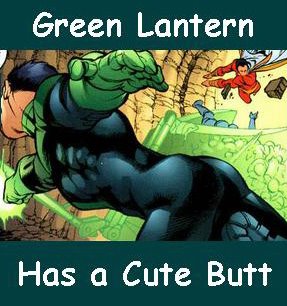
10. Three words: Green Lantern butts. Okay, okay, I'm kidding. But really, a little "manservice" for the ladies now and then wouldn't hurt. Just use it sparingly, because while it's good for an ironic chuckle now and then, it gets old fast.
So there you go.
Friday, January 12, 2007
Tetsuo!!!
I just now saw Akira for the first time. And, yeah, I'm pretty much blown away.
There's really not much to say about the film that hasn't already been said, and I'm sure I'm not articulate enough to do it justice. I will say that I was absolutely stunned by the quality of the animation (pretty much the first thing I look at, the geek that I am), which blows a lot of the anime you see today right out of the water. It's hard to believe that film this was made twenty years ago in 1987.
I also really like Katsuhiro Otomo's art style and character designs. They're only barely recognizable as anime, and definitely stand out. In fact, the pacing, dialog, and other factors are so radically different from mainstream Japanimation that one critic I've read categorized Akira (along with the works of Miyazaki, Oshii, and Evangelion) as non-anime. While to me, an American aficionado, Japanese animation is more or less a single continuum, I have to wonder what distinctions are seen by animators and viewers in Japan.
Sunday, December 31, 2006
No Pink Ponies!
Just putting in a little plug for a fave webcomic of mine: No Pink Ponies by Remy Mokhtar.
It's a good-natured little strip about a woman who runs a comic book shop and the unique characters who gather therein. It's awfully fun. The art is well-drawn and clean; I especially love the way Mokhtar draws faces.
(There's also a fair amount of, ah, fanservice... both for the guys and for the gals.)
So go! Check it out!
Friday, December 22, 2006
Tuesday, December 19, 2006
Attention to Detail
Here's an interesting link: A side-by-side comparison of photos from a small city in western Japan and screenshots from The Melancholy of Haruhi Suzumiya. Quite fascinating -- one of the things I loved about the show was the little details in the art, and the feeling that the characters inhabited a lived-in world. I wish more animation strove for this kind of verisimilitude.
Sunday, December 17, 2006
Creative Writing: Part Deux
A little while after I wrote my Arch-devil profile for Dicefreaks, I ended up writing another such profile, this time for a Demon Prince. I kinda like this one better -- it's an original character (albeit named after a Biblical figure), so I was able to be a little more creative instead of sticking to D&D continuity.
Read more...
Originally Rahab was named Dagon (and was largely inspired by the Lovecraft-derived B-movie of the same name), but I had to change it because the project already had a devil named Dagon. Oddly enough, a few years later, an official D&D sourcebook came out with a version of Dagon practically identical to the one I wrote below. (See here for Rahab w/full game stats done up by a fellow poster.)
RAHAB (Vepar, Sorath, Dagon)
The Demon Prince of the Lightless Depths, the Deep One, the Lord of the Deeps, Mariner's Bane, the Bringer of Storms
Symbol: A single round eye with no iris or pupil.
One of the most dreadful of the horrors of the Abyss, Rahab, the Demon Prince of the Lightless Depths, is a tentacled monstrosity that desires nothing less than the domination of all seas. One of the oldest demons in existance, the primordial horror that is Rahab is a creature of slime, darkness, and insanity that only the strongest of wills can stand to look upon without losing their mind.
Rahab's realm is the 873rd layer of the Abyss: the Lightless Depths. A water-filled realm, the Depths are literally without light: anyone without darkvision can see absolutely nothing in this layer. Here, Rahab swims through the black abyss, devouring the souls of those foolish or insane enough to call him their master. Unlike most other Demon Princes, Rahab shares his realm with several other powerful beings, including a number of myrmyxicuses. At one time he fought for his layer with dread King of the Deep, a demonic entity once beholden to the will of the now-dead goddess Takhisis, but the King was slain by heroes on the world of Krynn, and now Rahab's dominion over the Depths is unquestioned. It is likely that various other unique demons call the Depths home as well. These lesser horrors generally leave Rahab alone, and flee before his might when he approaches.
Like many fiends, Rahab is known by many names. Some of his followers speak of him as Vepar and others as Sorath. Some cultists know him as Dagon, but that name rightfully belongs to one of Hell's devils.
Because their "portfolios" overlap in regards to the slimy dwellers of the deep, Rahab is a sworn enemy of both the Demiurge Demogorgon and the dread Hadean god Panzuriel, but because of Rahab's relative weakness, clashes between their forces tend to be rare. Among the other powers he has made an enemy of are Sekolah of the sahuagin; Blibdoolpoolp of the kuo-toa; Eadro of the merfolk and locathah; Deep Sashelas of the elves; the Elemental Prince Ben-Hadar; and the human gods Aegir, Umberlee, and Poseidon. Of these, Poseidon is by far his deadliest rival: the Sea Father has sworn an oath to rid his oceans of Rahab's evil influence. It is common for Poseidon to recruit powerful heroes to brave the Lightless Depths and spy on his cultists' doings in the hopes that some headway might be made in his war against the demon. The Duke of Hell known as Dagon loathes Rahab as well for allowing the demon's followers to know him as Dagon.
Unsurprisingly, Rahab has virtually no friends. The only ally he has is Olhydra, the Princess of Evil Water. Because of the distance between their realms, however, and Olhydra's fickle nature, he has not found her a very reliable ally.
The goals of Rahab are the destruction of good sea life (such as aquatic elves) and the domination of neutral and evil denizens of the oceans. He has many worshippers among the creatures of slime and muck that dwell on the seabed: koprus, anguiliians, kuo-toas, ixitxachitls, rogue sahuagin, and even some renegade merfolk pay Rahab homage. All of these races have their own unique, foul rites that they perform in Rahab's name.
Rahab has a fairly widespread following of human cultists on the Prime Material Plane. Many a coastal fishing town has found itself at the mercy of a poor harvest and turned to Rahab-worship in hopes of rectifying the situation. Indeed, Rahab frequently rewards his worshippers with greater catches of fish and harvests of grain, as well as gifts of gold. Such cultists make a common practice of summoning their demonic master to their plane of existance and offering a living sacrifice - indeed, Rahab actually encourages his followers to summon him. Such conjurations give him an opportunity to spread his corruption, transforming his worshippers into maddened inhuman reflections of their old selves, creatures of slime as hideous as their master. Such summonings typically involve a blood sacrifice and the destruction of a small golden pyramid inscribed on each face with his unholy symbol.
Rahab is truly hideous. Only vaguely humanoid in shape, the Demon Prince of the Lightless Depths is a gargantuan cephalopoid monster. He looks something like a bloated, rubbery octopus, with a head like a human skull, a single cyclopean eye with no pupil set in its center. In place of a mouth, Rahab has a mass of ten-foot-long tentacles that dangle writhing from his head. Rahab has two huge tentacle-arms like those of an octopus that branch at each of their midpoints into ten squirming appendages. From his 'waist' depend twenty or more tentacles. His overall color is a dark green-brown, but Rahab can change his color to suit his whim. In addition to this hideous form, he can also change at will into a handsome merman some twenty feet from head to tail, with dark green skin and green-brown scales; he adopts this shape when summoned to the Prime by his human followers.
Friday, December 15, 2006
Creative Writing
This is an exercize in creative writing I undertook a few years ago as part of a project on a D&D community I frequent: a profile of an Arch-devil, sans game stats. It never made it into the final project, but it was still a fun experience and I enjoyed writing it.
I only wish I could harness this kind of creative power to write fiction.
Why yes, I am stroking my own ego by posting this, why do you ask?
Note that originally her name was "Zariel" and her successor was "Bel", but I had to change them to "Astarte" and "Bael" because that's what the mods wanted. I didn't like that because the actual Astarte and Bael were benign deities who had nothing to do with Hell. As a compromise, I tried to distinguish between the infernal versions of Astarte and Bael and the original deific versions by using alternate names for the latter (Ashera and Baal) and explaining the reason for the similarities in the names within the text.
ASTARTE
The Archdevil of Destruction, Deposed Lord of the First
aka Zariel, Zavebe
Shortly after the Great Fall, the Seven Virtues of Heaven saw the need to keep a watch on the fallen angels that descended into the Hells. The Supreme Virtue of the Seven Heavens chose one of its most powerful servants, a solar named Astarte, as the chief watcher over the fallen celestials in Avernus. Astarte was originally a vassal of the Virtue of the Sixth Heaven, and the general of one of the greatest flights of celestials in the Upper Planes; unlike her fellow solar Triel - now the devil Beelzebub - Astarte had never shown any signs of corruption, and seemed a perfect choice for the job of warden. So it was that, with an army of angels, Astarte flew through the planes of Arcadia, Mechanus, and Acheron to the blasted plains of Avernus in Hell.
Fighting off the hordes of devils that inevitably resisted their arrival, the forces of Astarte built a celestial fortress of bronze on Avernus, her stronghold against the evil of Hell. Their task was to keep a watch on the doings of fallen celestials in Avernus: to make sure that they made no attempt to return back to Heaven to exact vengeance. They repulsed several such attempts on the fallen angels' part, and the Bastions were confident in the outcome of their decision.
Unfortunately, they underestimated the corrupting nature of Hell's very fabric. The methods Astarte employed grew colder and harsher with each passing century, and the celestial fire that burned in her heart dimmed. Before a millenium had passed, Astarte and her similarly dispassioned followers began working with Hell's devils, who also sought to control the fallen celestials. Astarte stopped communicating with the Lords of Heaven and focused entirely on keeping the fallen in check. She allied with Urukbaramael, a solar who had fallen with Eblis and Triel, who employed similarly violent methods with his fellow fallen in his vain attempt to fall back into the Virtues' favor; together the two, both filled with misguided single-minded righteous fervor, struck fear into many of the fallen, and Astarte sank deeper into cold heartlesness.
In time, Astarte and Urukbaramael laid plans to sack the infernal lair of the terrible Chromatic Dragon, Tiamat, the Lord of the First at the time. Normally such a campaign would have failed, but the fallen hosts of the two caught the Lord of the First unawares. Together, Astarte and Urukbaramael stormed the Caverns of Greed; fighting her way past Tiamat's five draconic consorts and to the Great Hoard of the Dragon Queen, Astarte laid waste to Tiamat's guard, withstood her foul spells and the attacks of her vile breath, and brought her sword to bear while Urukbaramael kept a pair of Tiamat's Dukes at bay. She lifted her sword into the air and prepared to plunge the enchanted blade into the Lord of the First's blackened heart - until a terrible row split the air, fire engulfed the hoard-room, and the face of Asmodeus himself appeared before Astarte.
While Urukbaramael, the Dukes of Avernus, and even the Chromatic Dragon herself cowered at the horrible sight, Asmodeus told Astarte that if she would let Tiamat live, he would anoint her as the new Lord of the First Hell. Astarte considered the proposition for a moment - and accepted. As the diabolic power of the King of Hell transformed her, she left behind any pretense of loyalty to the Supreme Virtue and Heaven; as she took her place in the Great Machine of Hell, the last scraps of goodness left in her disappated. She was now a devil.
Asmodeus left Tiamat and her brood to guard the passage into Hell from her dragonspawn pits, and Astarte, with Urukbaramael at her side as her consort and right hand, began to establish herself as the new Warlord of Avernus, ruling from her Bronze Citadel. Part of her agreement with Asmodeus was that she continue to keep the fallen angels under check, a task she found much easier now that she had Tiamat's legions of devils as well as her own host of "loyal" fallen angels at her beck and call. Urukbaramael gladly led her armies, torturing and destroying his fellow fallen. So terrible was the dark army of Astarte that the fallen dubbed her the Lady of Destruction, a title that stuck with her among the rest of the diabolic hierarchy.
The other Archdevils - especially the former celestials Belial, Moloch, and Beelzebub, who resented her for her original purpose in Hell - were quick to label Astarte an upstart, but she cared not. She had no allies among the fiends besides Urukbaramael. The only other entity in Hell with whom she had nonagressive contact was the goblin deity Bargrivyek, whose dogma of strength and unity against the dissident she respected. It was not uncommon for Zariel to send a small detatchment of devils and fallen angels from time to time to aid Bargrivyek's goblins and hobgoblins in their raids against Draukari, the realm of his rival deity, Kurtulmak of the kobolds. In those times goblinoid ambassadors were frequently stationed in the Bronze Citadel, and fiendish emmisaries made their residence in Bargrivyek's spectacularly misnamed realm, the Peaceable Lands.
Outside of Hell, Astarte had contact, aggressive or otherwise, with even fewer entities. Only one being cared about her appearance in Hell: the fertility-goddess Ashera of the Canaanite pantheon. Using the similarities between their names as a stepping-board, the cold-hearted Astarte took the opportunity to establish a few cults by subverting Ashera's worshipers; but since Astarte was under the protection of the Overlord of Hell, Ashera could do nothing about it. (Interestingly, in a repetition of history, Astarte's successor Bael would take advantage of a similar situation by usurping worshipers of Ashera's consort, the great thunder-god Baal; both devils contributed to the tragic villainization of the Canaanite pantheon.)
By no means did her lack of political ties did not stop Astarte from scheming against her fellow Lords of the Nine. She placed numerous spies in the courts of Dispater and Mammon, and had designs of conquering Dis (a notion which the other Lords found laughable). She reserved special hatred for Great Belial and the Lord of the Flies for reasons she no longer cared about, and laid countless plans to undo the two fallen angels. She paid little attention to the Blood War, focusing her attention on routing the fallen on Avernus; she left the front against the demons of the Abyss to her pit fiend general, the devil known as Bael.
When the civil war later to be known as the Dies Irae swept across the Hells, Astarte allied with Beelzebub, Belial, Moloch, and Mammon mostly to keep an eye on the four; she could not have forseen the outcome of that decision. When it seemed that the infernal hosts of Beelzebub and Mephistopheles would actually defeat Asmodeus, Astarte left the Bronze Citadel and made haste to Nessus with the other five Lords to witness the spectacle - and then Geryon sounded the signal and the armies of the Lords all turned against their masters. So the Reckoning of the Dies Irae came to pass.
For reasons still poorly understood, the King of Hell reinstated all of the Lords save Geryon (his only loyal vassal among the Nine) and Moloch (who foolishly challenged Asmodeus for lordship again shortly after), who were replaced by Leviathan and Lilith respectively. Astarte returned to her Bronze Citadel humiliated, with nothing but her newly kindled hatred for Asmodeus occupying her mind. If the Reckoning taught the devil Geryon the worthlesness of blind trust in Hell, it taught Astarte not to ignore the sovreignity of the Dark Lord.
After the Reckoning, the Lady of Destruction lived up to her name more than ever, wantonly laying waste to fallen angels, invading demons and yugoloths, and rogue devils alike. Her consort Urukbaramael was disturbed by what he saw. He, at least, had hopes of returning to Heaven; it was his monstrously cruel methods that kept him in Hell. He recognized that Astarte now had no purpose whatsoever, and resentment grew in his heart for his mistress. When at last her general Bael swept into the Bronze Citadel, his aim to usurp the Lordship of Avernus, Urukbaramael willingly let him into Astarte's throne room, looked on apathetically while his one-time mistress was routed, and then left to pursue his own twisted agendas in Avernus once again.
In the battle that ensued, Bael fought his way past Astarte's defenses in much the same way Astarte had fought past Tiamat's. Bael's ferocious onslaught surprised her: although she was perhaps the dullest of the Lords of the Nine, it quickly occured to Astarte that the King of Hell was setting his will against her. She fought Bael like a titan enraged, but in the end it was futile, and the pit fiend subdued her.
In a coup well-known throughout the planes, Bael imprisoned Astarte in a chamber beneath her throne - now his throne - and began siphoning off her power. Her Lordship stripped from her and given to Bael, Astarte could not hope to escape from the Warlord's snares. Still she fights Bael's magic with hers, but to no avail: unless Asmodeus himself sees fit to release her, there is no hope left for the fallen angel Astarte.
As already noted, a few scattered cults once existed that devoted themselves to Astarte, focusing on prolonging unjust wars and destruction, but upon his ascension, Bael saw to it that they were destroyed, generally by sending his devils to quash his prisoner's supporters.
In her prime in Heaven, Astarte was a beautiful yet powerful creature fourteen feet in height, with shining golden skin and flowing black hair; golden light shone from her eyes. Her beautiful appearance did not change with her ascension to Lordship - except for the loss of her wings, which simply disappeared. Over her years in Hell, however, her countenance grew weary and haggard, her hair turned gray, and the light in her eyes died. Now, held immobile in a chamber within Bael's fortress, she presents a stark figure in tarnished silver armor with dead gray eyes that stares down upon would-be visitors. She can still speak and use most of her spell-like abilities, but otherwise she cannot move (and so cannot cast spells with somatic or material components, etc.).
Saturday, November 18, 2006
I Don't Like Batman
It's occured to me that I just don't like Batman. I mean, he's a great character, but, I dunno, I just don't read super-hero comics for normal guys with psychological issues beating up on street-level thugs -- I read them for people who fly around in colorful tights with frickin' lasers shooting out of their eyes.
The only time I ever really like Batman is when he's appearing with other super-heroes, like in the Justice League, taking on threats that normal humans would stand no chance against. Batman teaming up with Superman and Wonder Woman to kick an evil alien god's butt is one-thousand nine-hundred thirty-nine kinds of awesome. Batman in his own series tying up muggers is not.
And then there's the angst. MY PARENTS ARE DEAD, MY SIDEKICK IS DEAD... Jesus, man, get some damn therapy.
I'm also of the opinion that Batman simply is not complete without Robin, which is apparently an unpopular sentiment these days. Doesn't matter which Robin it is (though I have to say I like Dick Grayson better as Nightwing than I ever did as Robin) as long as he's there to keep Bruce's spirits up.
Meh. I'll take a Big Blue Boy Scout over a moody Dark Knight any day.
Subscribe to:
Posts (Atom)