Showing posts with label politics. Show all posts

Tuesday, May 12, 2009

About Captain Planet

Lewis "Linkara" Lovhaug is a cool guy who reviews bad comics. I really enjoy his video segment on That Guy With the Glasses, "Atop the Fourth Wall", and recommend y'all check him out.

Anyway, he reviewed a Captain Planet comic...


...which started me reflecting on the show it was based on. This post is adapted from my comment on his video.

I liked Captain Planet and the Planeteers when I was a kid, though I'm fully aware of its flaws now. I guess I just liked anything with action and superheroes, plus the lessons it delivered were in line with my family's values - we were and are a bunch of blue-collar New England Democrats, and respect for the environment is something I believe in.

But the problem, as many people have said, is that Captain Planet slams you over the head with its message, appealing to cheap emotional responses, while getting half of it wrong. I'm basically a socialist, but I'm mature enough to realize that capitalist CEOs aren't mustache-twirling villains - they're human beings just like me, and more often than not believe that they're doing right.

If you want to see what a good environmentalist story looks like, watch Hayao Miyazaki's Princess Mononoke. The proto-capitalist "antagonist" has noble motives and actually helps people in her own way by giving them employment and shelter. The conflict between her and the nature-worshiping protagonists (who can be seen as eco-terrorists) is far from cut-and-dry. Even the nature spirits themselves are not "good" - they're dangerous, alien creatures who can be downright monstrous.

On a less serious note, I always felt sorry for Ma-Ti, the Planeteers' fifth wheel. Everyone always gets down on him for having a stupid ability. What kind of dumb power is Heart, anyway? But when I think about it, he'd potentially be the most powerful of all the Planeteers. I mean, his powers include clairvoyance, telepathy, and mind control. Just think what he could do if he had the imagination - and the ruthlessness - to use that power to its full potential!

If I were writing Captain Planet? I'd set it 15 years in the future, where Ma-Ti has gotten fed up with being the butt monkey of the team. He's become an extremist and used his ring to become a Communist dictator, controlling the hearts and minds of the masses. The other Planeteers struggle against their former friend, but they dare not summon Captain Planet, for without Heart to guide him, the planet's avatar has become a mindless force of destruction, nature's wrath incarnate.

That's what kind of dumb power Heart is!

Wednesday, November 05, 2008

A Brief Political Interlude

Photobucket


YES!

WE!

DID!

We now return you to your regularly scheduled programming.

Monday, January 21, 2008

Answerman Saves the Day

I don't regularly read Anime News Network (I'm mainly a comics fan; anime is just a secondary obsession for me :P), but I was just looking up cast information on a series I'm currently following and happened to read this column while I was there.

While I understand the importance of being precise with your speech, honestly, "anime" just means "Japanese cartoons". People these days know what you mean when you say anime, but getting angry about people saying "Japanese cartoons" smacks of mindless elitism to me. The word "anime" does not imbue these things with some kind of foreign coolness, it's just an easy catch-all. It's the same with manga - there's really nothing wrong with calling them comics, or "Japanese comics" or whatever. Yeah, I guess it's "more correct" to say anime and manga but I often get the feeling when people "correct" you on this sort of thing, it's less about being precise or actually believing that the person saying "Japanese comics" doesn't know that they're "supposed" to say manga, it's more about being a bit pedantic and elitist.

Thank you, Answerman. Thank you. I loves me some anime and manga, but anyone who thinks that Sailor Moon is superior to Watchmen just by basis of its national origin is fooling themselves.

Also, Ron Paul is apparently the pro-anime candidate.

HAHAHAHAHA

Saturday, January 19, 2008

Afganis-tan

Um...

Am I the only one who finds this just a mite distasteful?

Especially this part here?

I mean, I think it's great and all that someone's trying to educate people about Central Asia's tumultuous history, but there's got to be a better way...

Friday, December 07, 2007

Thoughts on The Golden Compass

Apparently a lot of religious people are getting up in arms over this movie The Golden Compass because its creator is an outspoken atheist and he used his books to get his beliefs across to young readers.

So... wait wait wait.

One British guy writes a series of fantasy novels explaining his personal beliefs, and they're hailed as being among the greatest young adult literature of the 20th century.

Another British guy writes a series of fantasy novels explaining his personal beliefs, and... controversy.

Huh?

Okay, honestly? I liked The Chronicles of Narnia. They were well-written, they had engaging characters and exciting plots, and while I didn't agree with C. S. Lewis's Christian message I thought it was stated gracefully and eloquently. In fact, the main problem I did have with Lewis is simply that his fictional world wasn't created with as much verisimilitude as Tolkien's. :P I highly recommend his books.

So why the hell can't right-wing Christians have the grace to let someone outside their group have their say? Hypocrisy, much?

Ahh, well. In a way, the Christian Right is actually doing the "atheist agenda" (heh) a favor by raising such a stink. No such thing as bad press, after all.

Anyway, if I end up seeing this movie for political reasons, it won't be because the author's an atheist. It'll be because the villain is an evil woman named Coulter. :D

Sunday, November 25, 2007

Four-Color Politics

I've been thinking about writing this post for a very long time now, but my last post got me thinking, so now I've finally gotten around to it. It's weird, I know, but I enjoy trying to extrapolate political views from different fictional characters, and comics are no exception. Yeah, I have too much free time on my hands, wanna make something of it?

So without any ado...

Superman: Clark Kent votes Democrat, no question. His core guiding principle is that ordinary people can't defend themselves against certain things, be it alien invaders or poverty, and that it's his duty to help them. He's also a journalist, which is a traditionally liberal occupation. Given that he's a farmboy from Kansas, he's probably a Christian and part of the Religious Left, like Jimmy Carter or the late Martin Luther King: He believes his faith compels him to help the needy, but not to try and convert others or sign what he believes to be right on a spiritual level into law.

Batman: The (city) government is Batman's enemy: Like a criminal organization, it's got its fingers in everything; it's hopelessly corrupt, serving only its own ends. Batman believes he knows what's good for people better than they do. People need to be protected, but they don't need to know they're being watched. Plus he's a wealthy industrialist. Bruce Wayne is definitely a Republican.

Wonder Woman: Since she holds a title of royalty in another country, Wonder Woman can't be an American citizen and vote in our elections. She's not a monarchist, since she turned her duties as the Amazons' sovereign (back when her mother, the queen, was out of commission) over to an elected chancellor. She's strongly feminist and environmentalist, is a vegan, and has pagan religious beliefs. Diana can't vote for them, but I'd say she's probably an advocate of the Green Party.

The Flash: I can't say much about Barry Allen because he died long before I started reading comics, but it's been established in-continuity that he was a moderate Republican in the mold of Dwight Eisenhower, and it fits. He came from a small town in Illinois, was pro-capital punishment, and was socially conservative.

Green Lantern: Green Lantern was often paired with the far-left Green Arrow as a staunch moderate who never really questioned the status quo. I'd guess Hal Jordan is a swing voter; given his philosophy of rugged individualism, he probably leans toward Republican.

Aquaman: Atlantean monarchist. ;) I don't know much about Arthur's history, but he seems to rule Atlantis as a benevolent dictator.

Martian Manhunter: Thoroughly non-political. Though he's been on Earth since the '50s, J'onn J'onzz lived for much longer on an alien planet with a communal, telepathic social system that just doesn't map to anything we humans have come up with. If you reaaaaally stretch it you could call him an anarcho-communist.

Green Arrow: As mentioned above, Green Arrow is very far-left. He's the kind of pinko liberal your parents warned you about. In fact I'd say Oliver Queen is a "stealth" Socialist who votes Democrat in the same way Ron Paul is a Libertarian in Republican's clothing.

Hawkman: Very far-right. He believes in strict social rules, that the poor need only pick themselves up by the bootstraps to get ahead, and is intensely hawkish (groan) in his views on foreign policy. Carter Hall is undoubtedly a Nixon Republican. I'd bet he listens to Rush Limbaugh every day. In fact, scratch that: He probably has Rush Limbaugh on his speed-dial.

The Question: I doubt any of my non-comics-reading friends have ever even heard of him, but I can't leave him out. It's no secret that the late Vic Sage was a radical objectivist conspiracy theorist with an acute distrust of anything vaguely resembling government. Not a Libertarian -- even further than that. "Ayn Rand? Ayn Rand didn't go far enough!"

Captain America: As the "ultimate American" I think it's dangerous to tie Cap down to any one political ideology. That said, I think it's been established that Steve Rogers was a WWII-era New Deal Democrat, and that makes a certain amount of sense to me, given that he was a young lower-class New Yorker. He'd be more militarily inclined than modern Democrats and believe in the use of force, but still believe in social programs to help the poor.

Iron Man: Tony Stark is a billionaire weapons manufacturer, so there's no way he's anything but Republican. Possibly leaning towards Libertarian since he's not the type to push his ideals on others, but since he's all about his own power base he'd throw in with the GOP for the greater support they can give him.

Thor: Being a physical god, he's pretty much above human politics, much like the Martian. I don't know enough about his former alter ego, Donald Blake, to gauge his politics.

Spider-Man: Peter Parker is a middle-class high school teacher from New York, so he's probably a Democrat. That fits with his role as the protector of the little guy.

The Hulk: Hulk hate federal government. Hulk just want to be left alone. Hulk vote Libertarian.

Thursday, November 15, 2007

Seven Things You May Not Have Known About Filby

I was tagged by DJ Black Adam some two weeks ago and am only now getting around to it. Exam season's a bitch, I tells ya.

Please follow the rules of this game to the best of your ability. The rules of the game are:

A). Link to the person that tagged you and post the rules on your blog...

B). Share 7 random and/or weird facts about yourself...

C). Tag 7 random people at the end of your post and include links to their blogs...

D). Let each person know that they've been tagged by leaving a comment on their blog.

Facts About Filby

1) I'd really like to call myself a Democrat, but as long as the Congressional Dems keep being such spineless paper tigers I'm ashamed to do so. Until times change, I'm alone in independent Nader-land...

2) I first got into anime when I saw Fullmetal Alchemist, Record of Lodoss War, and Project A-Ko all in the same week by chance.

3) I got into comics because I was hyped about the League of Extraordinary Gentlemen movie (boy, was I let down) and read Alan Moore's graphic novel of the same name. I got into DC specifically when I read Kingdom Come on a whim the week after that.

4) I think that Mister Terrific really should team up with Zauriel sometime. The angel and the atheist, tell me that isn't a great story waiting to happen. They could hang out at a bar and have deep theological discussions or something.

5) My favorite president is either Abraham Lincoln or John F. Kennedy, depending on the day. My least favorite president is Warren G. Harding (Dubya comes in a very close second).

6) I'm pretty picky in my taste for music. I can't stand country, rap/hip-hop, metal, religious music, punk/emo, or the Beatles. I do like Canadian folk rock, though.

7) I cry easily at movies. Like, when Sam carried Frodo up Mount Doom, man, I was bawlin'.

I elect to break the rules and tag NOBODY! Mua-ha-ha!

Saturday, October 27, 2007

Happiness Meme

Tagged by my friend Beaupepys on LiveJournal, and I thought I'd cross-post here. We all need to focus on the brighter side from time to time...

The rules are simple. Just create a post about any number of things that have made you happy recently. Then tag any number of people and have them post this meme on their blogs.

1) The Red Sox getting to the World Series and winning 2 games out of the 4 needed to win. GO SOX!!!

2) The imminent end of the Bush administration. Honestly, even if we do get another Republican in office (crossing my fingers we don't), it'll still be better than the last seven years.

3) The "Sinestro Corps War" storyline in Green Lantern. I'm a sucker for overblown cosmic adventures with casts of hundreds where the fate of the universe -- nay, the multiverse! -- is at stake, and the top-notch art and writing is icing on the cake.

4) Speaking of cake, my dad's birthday earlier this week. Even if we had a bunch of unwanted visitors bursting in uninvited. :P

5) And speaking of my dad, if all goes well, within a month I'll be receiving a paycheck from the state for looking after him. It won't be a lot of money, but anything is something.

6) For the first time in my life, I don't hate algebra.

7) OMFG I got a hobbit deck for Magic. And it rocks! Joy!

8) '80s music. Specifically Electric Light Orchestra's "Twilight." And also Journey's "Don't Stop Believing."

9) Shortpacked!

10) Drawing, like usual. Too bad I don't have a scanner.

I tag Ami Angelwings, DJ Black Adam, and Zhinxy.

Monday, October 22, 2007

Gasp! Shock! Horror of Horrors! Dumbledore is--- GAY?!

A tip o' da hat to Thom Wade. May the hair on his toes never fall out!

...er, wait. Wrong fandom. Moving on...

ONOZ DUMBLEDORE IS TEH GAY!!!!11

At first I thought that was from CBS and I was all like, "You call this shit reporting? I expect this from Fox, but geez!" But then I realized, "Oho, it's CBN! Pat Robertson's guys! That makes perfect sense!" Ahh, I love the smell of Christofascist moral panic in the morning.

Seriously, there are too many broadcasting networks with "CB" in their name. CBS, CBN, CBC...

I also love how the "reporter" thinks that Fan Fiction is one specific website and that all the fanfic on the 'Net is located there.

Oh, and the "young fan" was nineteen.

On a more serious note, I think it's great that Rowling made the conscious decision to write such a popular character as gay, but I agree with Kalinara in that it would have been a lot more courageous on her part if she'd explicitly written that detail in the books instead of tossing it out as a sound bite months after the series ended. A casual reader 20 years from now will be none the wiser.

Wednesday, August 22, 2007

"When everyone is super, no one will be."

I've just read a convincing argument that The Incredibles is conservative claptrap.

I mean... I love the movie, it was funny, it had great characters, great action, but the basic message here is that some people are just born better and that anyone else trying to be as good as them is wrong; and that in trying to level the playing field and give everyone a sporting chance (affirmative action, feminism, prepackaged super-powers), we're preventing special people from living up to their potential and enforcing mediocrity on everyone. "They keep on finding new ways to celebrate mediocrity." "When everyone is super, no one will be."

Now, the film was set in the early 1960s, when people were deathly afraid of communism turning everyone into identical drones and that the liberals were in cahoots. And of course the creators of the film have every right to express their beliefs however they see fit. But it's just... jarring to come to that realization.

Saturday, August 18, 2007

Moral Panic and Popular Culture

This is actually a research paper I wrote earlier this year; now that it's behind me, I felt like sharing it. It could use a lot of work, I'm sure, but as the closest thing I'll probably ever get to a scholarly dissertation, I don't think it came out too badly. I've removed the citations for ease of reading.

Moral Panic and Popular Culture

On April 20, 1999, two teenage boys named Eric Harris and Dylan Klebold came to Columbine High School in Columbine, Colorado and gunned down their classmates, murdering twelve students and one teacher and leaving twenty-four wounded. When it was learned that they had planned their attack ahead of time using a popular violent video game as a simulator, the American mass media launched into a feeding frenzy, blaming this game and others like it for the boys' murderous rampage.

Between 1988 and 1989, an introverted print-shop employee, Tsutomu Miyazaki, kidnapped, killed, and performed acts of necrophilia on four girls of preschool age before being apprehended by Tokyo police. When the authorities searched his apartment, they found it filled with nearly six thousand videos, including gory "slasher" films and animated child pornography, as well as many comics of a similar nature. The Japanese media leapt upon the incident, and many soon believed that all otaku – fans of comics and animation – were just as deranged as Miyazaki.

In 1950, a fourteen-year-old boy named Willie was tried and sentenced for the murder of a man whom he supposedly shot from the roof of his building. An avid fan of violent comics about gangsters, Willie had seen many ads in his comics for hunting rifles, and eventually obtained one for himself. Though the case received little nationwide attention, to a child psychiatrist named Fredric Wertham, who had known Willie since infancy, it was symptomatic of a mass breakdown of societal morality caused by trashy comic books.

These are but a few examples of moral panic, that tendency of people to believe en masse that something poses a greater threat to society at large than it actually does. The term was popularized in 1971 by sociologist Jock Young in his studies on drug culture. For the purposes of this paper, we shall focus on the phenomenon in relation to popular commercial culture. We shall see in the end that moral panic directed against popular culture is not justified at all.

At least as far back as the 1790s in Great Britain, growing industrialization and urbanization, mass publication, and the creation of mass transit led to the birth of a nationwide commercial culture, in contrast to the communal pastimes that had previously provided entertainment. Even then there were those who railed against "the poison continually flowing thro' [sic] the channel of vulgar and licentious publications.” By the 1830s, British legislators were speaking out against penny gaffs, inexpensive plays with bawdy or sensationalist content, which were supposedly corrupting "the children of the lower classes" and leading them to crime. Thus, we see that moral panic is nothing new.

A classic example of moral panic was the crusade of Doctor Frederic R. Wertham against American comic books in the 1950s. Comic books were wildly popular in the 1940s and 1950s, having enjoyed widespread popularity among United States soldiers during the Second World War thanks to their colorful heroes fighting against the Axis powers. After the war, comics about masked mystery men fell out of popularity, to be replaced by comics about gangsters and supernatural horror – Tales from the Crypt, still popular today, got its start in this era, then published by EC Comics. A 1950 survey showed that 41 percent of American adult males and 28 percent of adult women regularly read comics; another survey in the same year revealed that 54 percent of comics readers were twenty years of age or older. Comics were even more popular among young people, however: 95 percent of boys and 91 percent of girls between the ages of six and eleven read comics, as did 80 percent of all teenagers.

During the war, the likes of Superman and Captain America had drawn criticism from parents for their might-makes-right message. Intellectuals viewed comics as a drug for children and the mentally deficient, keeping them occupied with colorful characters and black-and-white conflicts settled through brute force. This concern turned to outright panic with the ascendancy of horror and crime comics, which regularly portrayed cold-blooded murder, wanton sex, and supernatural elements such as occultism, vampirism, and walking corpses. Despite being sold to children, however, these stories were written with adults in mind. "We were writing for ourselves at our age level," recalled EC Comics editor and artist Al Feldstein in 1972.

Doctor Fredric Wertham abhorred all this. A German-born New York psychiatrist, Doctor Wertham believed that there was a direct link between comics and juvenile crime. A resident psychiatrist at the free Lafargue Clinic in Harlem, Wertham cared greatly for the mental health of children and was an ardent supporter of civil rights for people of color. Wertham drew many disturbing conclusions from his studies on comics and published them in his 1953 book, Seduction of the Innocent. Wertham was convinced that violent imagery led children to perform violent acts. For instance, one ten-year-old child he interviewed said:

"Once I saw in a science comic where this beast comes from Mars. It showed a man’s hand over his eyes and streams of blood coming down. I play a little rough with the kids sometimes. I don’t mean to hurt them. In a game I said I would gouge a child’s eyes out. I was playing that I was walking around and I jumped out at him. I scratched his face. Then I caught him and sucked the blood out of his throat. In another game I said, 'I’ll scratch your eyes out!'"

The boy later said, “I played such games because I got them from comic books.”

Wertham picked and chose his examples, however, often citing fringe comics with low readership and exceptionally gory content as the norm; none of them were from major, mainstream publishers like DC or Fawcett. He spoke at length about comics leading children to homosexuality, displaying the prejudices of his day. He condemned Batman and Robin for promoting a gay lifestyle and Wonder Woman for partaking in un-feminine activities. He went out of his way to attack the use of onomatopoeic words as "thunk" and "blam," apparently believing that they degraded children's reading skills.

Wertham also never addressed whether his case studies were true of delinquents across the board and tended to jump to conclusions without considering all evidence. His case studies were just a random assortment of juvenile delinquents who all just happened to read comic books.

Doctor Wertham’s accusations toward the comics industry weren’t all hyperbole. For instance, he was immensely troubled by the comics’ depiction of blacks, Asians, Native Americans, and other racial and ethnic minorities as sub-humans and savages. He was concerned with the hypersexualization of women in comic book stories and ads and the effect they had on girls’ self-image. Despite this, however, most of his declarations amounted to alarmist hype.

Regardless, people listened. Senator Joseph McCarthy and the House of Representatives Committee on Un-American Activities, already at odds with EC publisher Lev Gleason due to his leftist political leanings, turned an ear to Wertham. Despite one 1950 congressional hearing that found that crime was actually decreasing when crime comics were at their most popular, Wertham pushed on. A 1953 Senate hearing in which Wertham testified – described by a British comics authority as a show trial much like the anti-communist witch hunts of the era – ultimately fell in Wertham’s favor. In 1954, in response to veiled congressional threats of censorship, a group of major comics publishers formed the Comics Code Authority, a draconian self-censoring committee. Over 100 comics series were put out of publication due to failure to comply with CCA standards. The CCA essentially neutered the industry, reducing comics to harmless fluff for children. Comics sales would not begin to pick up until the introduction of Stan Lee’s popular characters at Marvel Comics in the early 1960s (the Fantastic Four, Spider-Man, etc.), and comics written for adults would not appear again until the “underground” comics late in the same decade, and in either case the damage was done: Comics sales never rose above a fraction of what they were after the war, even to this day.

Japan in the 1980s and 1990s provides an interesting parallel to Wertham's America. Unlike America, comics in Japan (manga) never experienced significant censorship, and by the 1980s they were regarded as a mainstream medium for readers of all ages, much like television or video is in America. Toward the end of the 1980s, pornographic manga was as easily available as adult videos are in America, some of it containing elements of rorikon (from "Lolita complex") – child pornography. It was in this time and place that Tsutomu Miyazaki went on his killing spree.

The Miyazaki slayings would not be the only time the Japanese media turned the spotlight on manga. Media outcry against manga and anime (Japanese animation) repeated in 1995, due to their use as promotional tools by the doomsday cult, Aum Shinrikyō. Aum's leader, Shōkō Asahara, directly lifted some of his ideology from popular science-fiction anime of the 1970s, such as Space Battleship Yamato and Future Boy Conan, and many of his converts were culled from the otaku subculture. Aum was responsible for the deaths of twelve people when they unleashed nerve gas in the Tokyo subway system. The idea that a fevered mind could draw such grisly plans from cartoons shocked parents.

Some claim that violent and sexual imagery in the media is leading to societal breakdown. For instance, one commentator claimed that adults and youth alike receive "inspiration" from television featuring "casual sex and filthy language," leading them to commit acts of molestation and adultery. The same source notes that in 1996, cases of STD infection, divorce rates, and television viewing were at an all-time high in America. Yet in Wertham's America, the rate of murders per year was at an all-time low when comics, then filling the niche that television fills today, were experiencing the highest sales they would ever attain. In Japan, comic books regularly portray acts of sex and violence that make anything American television has to offer seem tame in comparison; yet two 1994-5 studies on crime revealed that Japan experiences about one-tenth as many murders and one-fortieth as many rapes as the United States. Despite the constant barrage of sexuality in popular culture, dating back as far as the erotic ukiyo-e art of the 1600s, people in Japan continue to present an air of staidness and repression. As the commentator above himself admits, "No cause-and-effect relationship can be absolutely proven."

All too often, self-appointed moral guardians use popular culture as a scapegoat, an excuse not to deal with legitimate social problems such as poor education or poverty. Sensationalism is easy: A headline that reads “Gory video game turns boy into killer” sells more papers than “Lonely boy turns against classmates.” Hip-hop music, wildly popular among French youth (the country being the second largest market for the music after the United States) was blamed by some in the media for the devastating Paris riots of 2005, ignoring France’s long history of neglect towards its ethnic minorities. The rioters’ outrage may have been reflected in hip-hop, but it was fuelled by poverty and racism.

Throughout the ages and especially in the past few centuries, popular culture has been blamed for everything from individual acts of violence to the breakdown of society at large. Looking beyond this alarmist hype, however, we see that other forces are at play: Individuals’ personal experiences, cultural influences, and society’s own failure to look after its members. Moral panic, we see, is simply not warranted at all.

References:

Chagall, David. “Television – The Phantom Reality.” The Media & Morality. Ed. Robert M. Baird, William E. Loges, Stuart E. Rosenbaum. Amherst: Prometheus Books, 1999. 259-76.

Dudley, William, ed. Opposing Viewpoints: Mass Media. Farmington Hills: Greenhaven Press, 2005.

McBride, James. “Hip-Hop Planet.” National Geographic. Apr. 2007: 100-19.

Perry, George, and Alan Aldridge. The Penguin Book of Comics. Norwich: Jarrold & Sons, Ltd. 1967.

Schodt, Frederik L. Dreamland Japan: Writings on Modern Manga. Berkley: Stone Bridge Press. 1996.

Springhall, John. Youth, Popular Culture and Moral Panics: Penny Gaffs to Gangsta-Rap, 1830-1996. New York: St. Martin’s Press. 1998.

Thompson, Jack. “Violent Video Games Promote Violence.” Opposing Viewpoints: Popular Culture. Ed. John Woodward. Farmington Hills: Greenhaven Press, 2005.

Wertham, Frederic. Seduction of the Innocent. Toronto: Clarke, Irwin & Company. 1953.

Friday, August 10, 2007

Willis Gets it Right

It's good to know you can always count on David Willis to cut right to the heart of the matter.

"You can't empower females! That's political correctness! And we all know that's the worst thing that could ever happen. Ever."

Thursday, July 19, 2007

I don't see a problem with it.

I usually have a strict policy of not talking politics on my Blogger journal; I keep my political ramblings limited to my LiveJournal. But this is something that's been bothering me for some time, and it's relevant to my interest in comics, so I've decided to post it here.

There's been some discussion in the comics fan community lately over the cover to a collection of various Batgirl stories from the '60s (and the same has happened many times before over many other matters) that shows Batgirl putting on make-up rather than, you know, kicking ass like a super-hero should. The reaction has been the same as it always is: The fangirls on one side saying how demeaning it is, and the fanboys on the other side saying how they just don't see a problem with it and that the girls shouldn't worry their pretty little heads over it.

News flash, boys. YOU DON'T GET TO TELL ANYONE NOT TO WORRY ABOUT ANYTHING.

See, that's what I think is wrong with society. It's not the the Klansmen, the wife-beaters, or the gay-bashers who are the real problem here. We can see their evil for what it is and deal with them accordingly. No, the real problem here is, just like MLK said, the status quo-worshiping moderates who just don't understand why all those coloreds, broads, and queers have to be so darned uppity. After all, things look awful swell from where we're sitting; why do all of them have a problem with it?

If someone has a problem with anything in our society, it is their right -- it is their DUTY -- to speak up about it. You don't have to agree with their viewpoint, BUT YOU CANNOT TELL THEM THEIR OPINIONS ARE NOT WORTHWHILE.

I'm not even going to get into my own opinion of the cover. I just wanted to get that thought out there.

Saturday, February 03, 2007

Pet Peeves

Originally this was meant to be a Thursday Thirteen post, of which I'd learned from Ragnell's Written Word, but after I finished I realized that A) the point was to come up with your own list of thirteen items, not copy the same theme from someone else (I have a history of leaping before I look), and B) it wasn't Thursday anymore. So I'm just posting this as is without the Thu13 code/formatting.

I may get in on the Thursday Thirteen meme when Thursday next rolls around, though. Might be good for me, giving me something to write about every week. Now that I'm back in English class after a year's absence, I need all the practice I can get.

Anyway. In no particular order, just as they popped into my head...

Thirteen Things that Bug the Crap Out of Me

1. Moe. Fucking moe. Er, the Japanese artistic aesthetic, that is. Not Moe Howard. For those not familiar, moe is an aesthetic that has been gaining ground in anime and manga over the last five or six years. The exact definition is debated, but for the most part moe seems to be about catering to (usually male) viewers' preferences or fetishes using (usually female) characters; often, the moe character is young, cute, innocent, nonthreatening, and designed to make the audience want to nurture her or cheer her on. Add on various fetishistic personality or physical traits, such as clumsiness, stubbornness, glasses, schoolgirl or maid uniform, and so on. Typically, a manga or anime series that relies on the moe aesthetic includes many different such characters with different traits, so as to attract as wide an audience as possible. Moe is ostensibly non-sexual on the creators' part by definition, though creepy otaku pedophiles always find a way to sexualize it.

In summary: Underage females who exist for no reason but to attract a male audience. I don't need to explain why that's so wrong.

2. Ken Akamatsu. Filthy pedophile. In fact, I might as well file all lolicon and shotacon under this heading. Akamatsu just stands out because he's so high-profile.

3. Whiny comic book fans. Look, people, I'm just as sad as you are that Blue Beetle is dead, but it's been three fucking years so shut your yaps and find something else to bitch about.

4. While I'm bashing Scans Daily -- rabid slashers. OMG BATMAN IS STANDING THREE FEET FROM TAHT GUY THEY ARE TEH GAAAAAAAAAAAAAAAAAAAYYYYYYYY!!!!!!!!!!!1111one!!!SQUEEEEEE Shut the hell up. Nothing against slash -- hell, I think Booster Gold and the Blue Beetle make a damn cute couple -- but come. on.

5. Any and all outdoors work, but especially raking leaves and shovelling snow.

6. John Byrne. 'Nuff said.

7. Otaku who think that Neon Genesis Evangelion is the greatest anime series of all time. Yes it was very well-written (at times) and yes Hideaki Anno is a very good director (at times), but the quality of the animation was sub-par, the characters all grate, and at times it was utterly obtuse. Evangelion is not the end-all be-all of world animation.

Patlabor is.

8. Hell, can I just list otaku in general? Anybody who willingly takes that label upon him- or herself has to have something wrong with them.

9. Ranma 1/2. I still can't believe I sat through nine seasons of that garbage.

10. Die-hard video gamers. I hate them. The ones who call you a "n00b" if your high score is just 3 less than theirs. The ones who think Penny Arcade is the funniest thing of all time. The ones who won't stop quoting that lame-ass "All your base are belong to us" shit. I hate them. They need to die. I want to kill them with fire.

11. Gratuitous Japanese used by American otaku (Baka kawaii snorlax!!!), and gratuitous English used in Japanese media. The superficial overuse of two beautiful languages by people who don't fully understand them irks me. I'm willing to give the Japanese a tad more leeway though, given how their culture was totally overshadowed by America's for decades. But it's still annoying.

12. Political pundits. Bill O'Reilly, Al Franken, Ann Coulter, Jon Stewart, Rush Limbaugh, Michael Moore... I don't care if they swing left, right, up, down, or all around -- these are the kind of obnoxious self-aggrandizing assholes whom we avoid like the plague at cocktail parties, so why should we have to tolerate them on our mass media?

Except for Stephen Colbert. He plays D&D. That makes him cool. "What's a 23rd-level magic-user? Just somebody you don't wanna mess with."

13. They Might Be Giants. I don't care how clever or meaningful their lyrics are, I don't care how quirky they are, I don't care that they teamed up with Homestar Runner once, and no offense to those who do like them -- I'm just not into them. You can take away my geek card now.

~~~

So there ya go.

(Still hoping to do that 52-meets-Evangelion post... if I can muster up the energy...)

Sunday, January 28, 2007

To DC Comics...

Recently, DC Comics put out a (rather condescending) notice that it's trying to attract more female readers. There are a whole lot of women reading mainstream comics, but they're very much in the minority. Anyway, here is my response. It's largely made up of points made by other writers, but collected under a single header, with my own commentary and ideas.

1. The first one is the most obvious: Stop writing female characters as sex objects. There's nothing wrong with writing about a sexy woman as long as she's sexy on her own terms, so stop putting female characters in positions that "just happen" to show off their physical assets. Stop putting them in peril so the male characters can rescue them (why the hell does Mary Marvel get bound and gagged so often if she has the same powers as Captain Marvel, anyway?). And give them sensible outfits: It's okay for a female character to like how she looks and show off a bit, but what woman in the world with any ounce of self-respect would wear this abomination?

2. Also, stop using sexual harassment or romance as motivations for female characters to become heroes -- it's possible for women to do heroic things that aren't motivated by love or fear of/revenge for harassment. Don't have her trying to live up to her father (Lara Croft) or other male characters (Supergirl). The problem with all these things is that they tie the men in her life directly into the woman's story, rather than making her her own character.

3. We all know that mainstream comics are basically about adolescent male power fantasies. This isn't in and of itself a bad thing. But I ask you: Where are the adolescent female power fantasies? Many young girls dream about being a beautiful magical princess (and I cover that below), but many girls also would like to punch out whoever bothers them, perform amazing feats to the wonderment of onlookers, and just do good deeds for their own sake. And yet many of the best-known and longest-running female super-heroes are just lesser versions of male counterparts: Supergirl, Batgirl, Mary Marvel, etc. Even Wonder Woman, the greatest super-heroine, is not as strong as Superman (I like to think that her formal warrior training and magical weapons bring her up to his level, but still). That's the biggest problem with women in comics: They're strong, but never as strong as the men.

4. In the same vein, less female super-heroes with passive powers, like the Invisible Girl or Shadowcat from the X-Men. Admittedly, invisibility or walking through walls could be really cool in certain venues (Sue Storm would make an awesome secret agent, for instance), but not in mainstream comic books. There need to be more female super-heroes who can bench the Empire State Building and shoot frickin' lasers out of their eyes and such.

5. Combining items 1, 2, 3, and 4... Market the hell out of Wonder Woman. Seriously, Wonder Woman is the archetypal female super-hero. WW's one of the "Big Three," but her lack of mainstream exposure compared to Superman and Batman is inexcusable. Most people know her only from the campy '70s TV series with Linda Carter. Diana also has only one comics series, compared to Clark and Bruce, who each have three -- if we can have Superman and Action Comics and Batman and Detective Comics, why not bring back Sensation Comics? There needs to be a Wonder Woman movie franchise, animated series, lunchboxes (they still make lunchboxes, right?), underoos, etc., etc., etc. The public should know her story inside and out like they do Supes and Bats. Make people know her, love her, want to be her.

6. Get more female writers and artists. Really, women just tend to be better at writing women then men because, well, they are women. This is not to say that men should never write about women of course, just that female writers have a built-in perspective on the subject that male writers lack. Come on, Gail Simone can't do it all herself.

7. Create an imprint for importing Japanese manga, including many shoujo titles. This one's a no-brainer, and DC's already doing it with their CMX imprint. The biggest problem I see is finding any really good manga titles before the existing American publishers gobble them all up and glut the market.

8. Publish more comics in the trade paperback format and sell them in bookstores rather than monthly 22-page pamphlets in comic book shops. Not many girls go to comic book shops for reasons that are pretty much obvious: they tend to be dark, dirty, and frequented by creepy male nerds. As such, they just can't easily reach female readers. (The things comics shops can do to make themselves more female-friendly is a topic for another time.) But if major companies were to publish their comics in the same format and put them one shelf over from Inu-Yasha, a lot more girls would take notice. Again, DC is already doing this, with their (poorly-named, IMO) Minx imprint.

9. Bring back Amethyst, Princess of Gemworld. Not all female heroes need to be about smashing things. As Neil Gaiman noted in The Sandman: A Game of You, normal girls who find out that they're really beautiful princesses are a very important archetype in fiction, going back at least as far as Cinderella. There is a reason that Sailor Moon was so popular, after all. Amethyst would be a perfect gateway for young girls interested in comics, and the fantasy setting could attract even more readers from different demographics. And hey -- princesses and power fantasies don't have to be mutually exclusive. Amethyst could be a magical princess who kicks righteous ass. Why not?

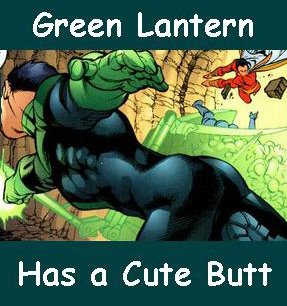
10. Three words: Green Lantern butts. Okay, okay, I'm kidding. But really, a little "manservice" for the ladies now and then wouldn't hurt. Just use it sparingly, because while it's good for an ironic chuckle now and then, it gets old fast.

So there you go.

Friday, September 08, 2006

The Spirit of '43, or: Propaganda Sucks

(Cross-posted from my LJ.)

Here's an interesting thing I found on YouTube -- a WWII propaganda cartoon with Donald Duck.


I remember seeing this on a VHS tape when I was a very small kid. The narrator on the second half of the film creeps me out. "Guns! Guns! Guns!" And the tone he uses just sounds so malicious and venomous.

It also strikes me as interesting how it's implied that Germany and Japan were infringing on America's freedom. Certainly their own peoples' freedom, as well as France, Poland, China, and Korea's freedom, but as far as I'm aware they never had any designs on conquering America; it's pretty damn easy to draw parallels between that kind of propaganda and the lies the Bush administration is feeding us today about our "War on Terror."

All I can say in the end is that I'm just very glad we don't have this sort of overt propaganda in this day and age. (Not-so-overt propaganda, on the other hand...)